
I have just got back from a holiday in the Canaries. Holidays are a great time to take in the sunshine, relax and yes – read a little. Reading is a wonderful way of relaxing and this time I read three books – two fiction and one factual.
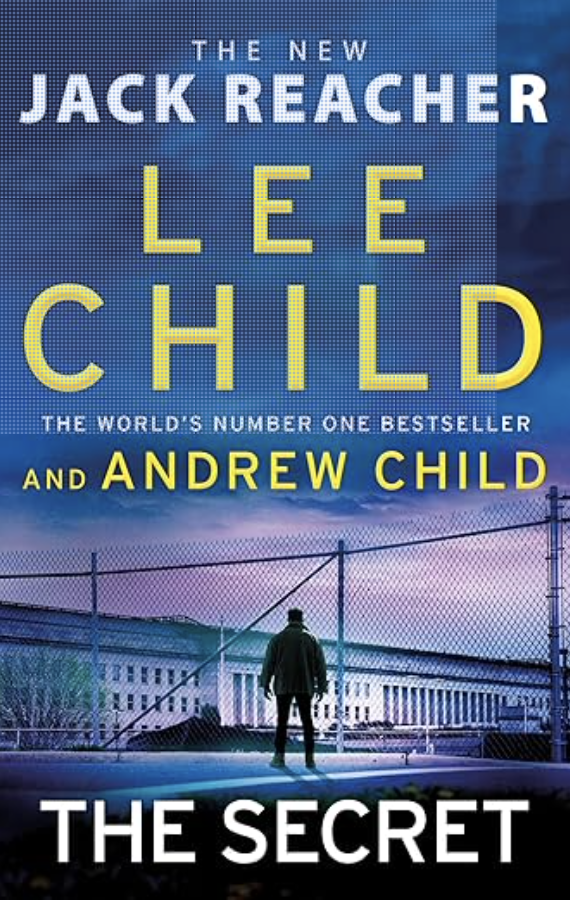
I love a good story and Lee Child’s ‘The Secret’ was a very easy and entertaining read. I’m a fan of the Jack Reacher movies, but this was the first time I had read one of Lee Child’s novels about Reacher. The plot was a little predictable, but it was executed incredibly well. My preferred genre is sci-fi, but as a writer you can learn a lot from studying the Thriller genre. It has its own tropes and techniques, one of which is the two-story line approach.
The two story-line approach
The two story-line approach is a technique I first encountered almost forty years ago in “The day of Jackal” by Fredrick Forsyth. It’s a common technique in thrillers, where the story-lines alternate between the antagonist’s storyline and that of the hero. They switch scenes usually at a critical point, so you have to read through next scene to find out where the story is going. And when you read the next scene it also ends at another critical point. So it almost forces you read on. The first half of Forsyth’s book was a bit slow, but once you get to the half way point it was impossible to put down the book. I remember I finished it in the early hours of the morning.
The Jack Reacher story I read this month is similar. The antagonists have their own story-line and raises the question why they are stalking and killing a list of people. Meanwhile, Reacher is investigating a wholly different case. It is only later in the story that the storylines come together. It’s cleverly constructed and executed.
The two story-line approach is also a wonderful way of creating tension, since the reader has knowledge to the antagonist’s intentions, which the hero does not. I’ve used the approach myself in my own writing. And it’s one of the reasons I usually write using the limited third person’s point of view, and in the past tense. That is each scene has its own point of view character from which the scene is written.
The one story-line approach.
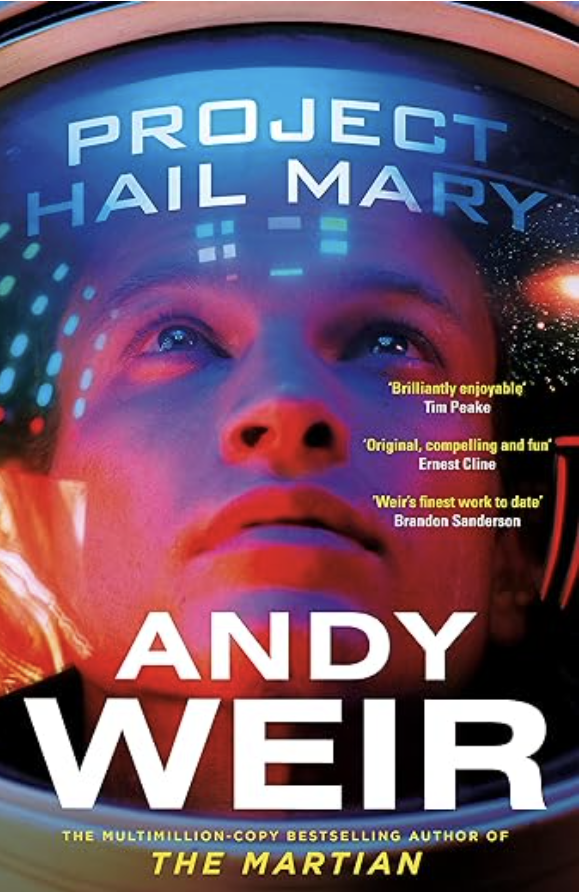
The second novel I read was Andy Weir’s ‘Project Hail Mary’. It’s written in the first person and and current tense and therefore contrasts with Lee Child’s third person, past tense.The choice of point of view and tense is one of preferences a writer has to choose before starting a story. The advantage of first person is that the reader can more easily connect with the main character. It’s more personal and is often used in YA and Romance novels. The disadvantage of first person is that the reader only experiences that which the main character experiences directly.
The plot of Project Hail Mary is clever and well written. It reminds me of the 1985 movie “Enemy Mine” where an earthling builds a relationship with an alien, although how they become friends is quite different. The plot is well constructed and detailed, which is one of Andy Weir’s hallmarks. He explains how for example, the protagonist can travel for 13 years to a different star system. If I have a criticism at all it is that Weir is often caught up in the details of explaining the pseudo science, where I found myself speed reading over the detail.
The ‘Secret’ and ‘Project Hail Mary’ were two entertains holiday reads which the display the differences in use of the writer’s point of view and tense. It is one of the first things I learned as a new writer. I always stick to one point of view per scene, and if I want to change point of view I change scenes.
If you’re a new writer or just a passionate reader do you have a preferred point of view method?
 JMJ Williamson